
Robotics
R&D of Fully Coupled Tendon-Driven Mechanisms
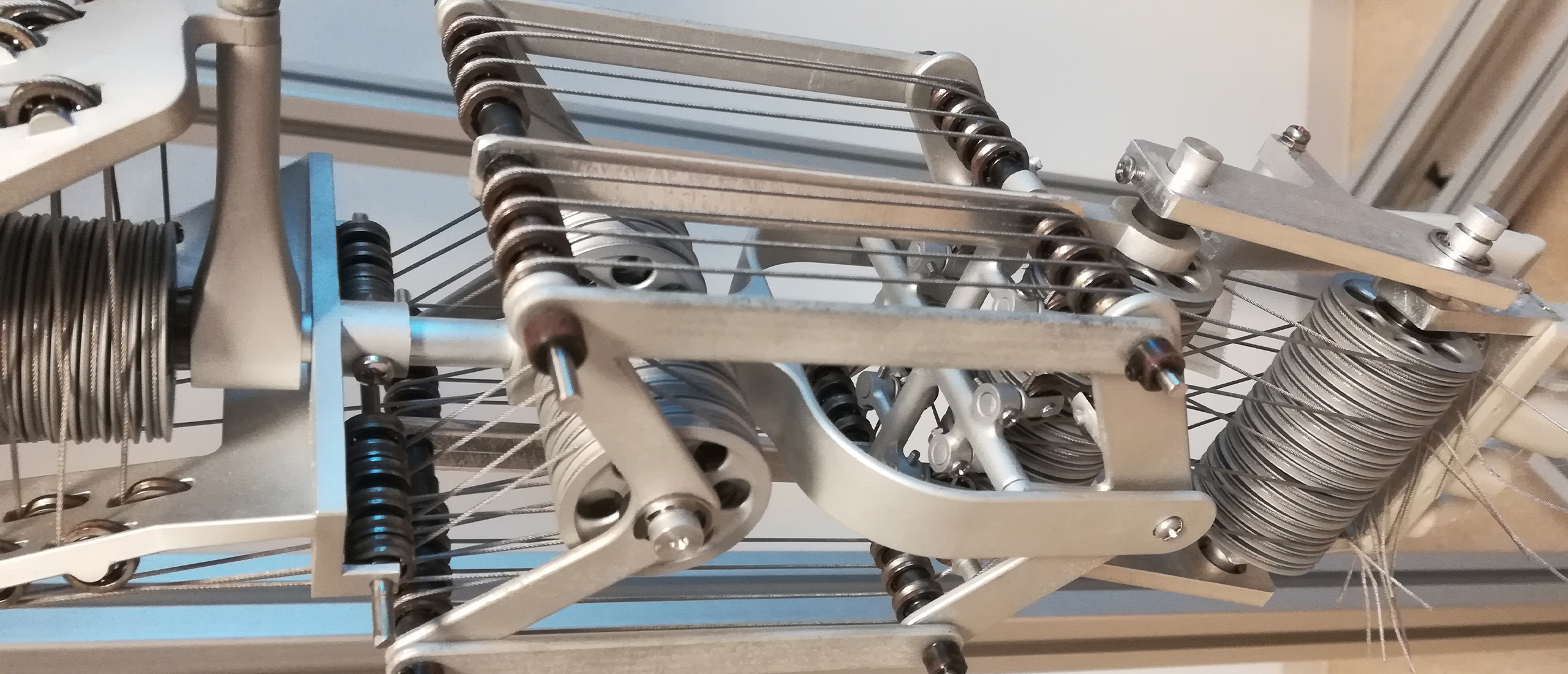
A fully coupled tendon-driven mechanism is a drive system in which every actuator output contributes to every joint. By summing actuator outputs, large joint torques can be obtained from small actuators, leading to lightweight, high-output robots. We develop both the theory and the physical implementation.
Current members: Hiroki SATO (M2) · Yuzhou LUO (M2) · Zewen LI (M1)
Fully Coupled Tendon-Driven Mechanism
2018 – present
Overview
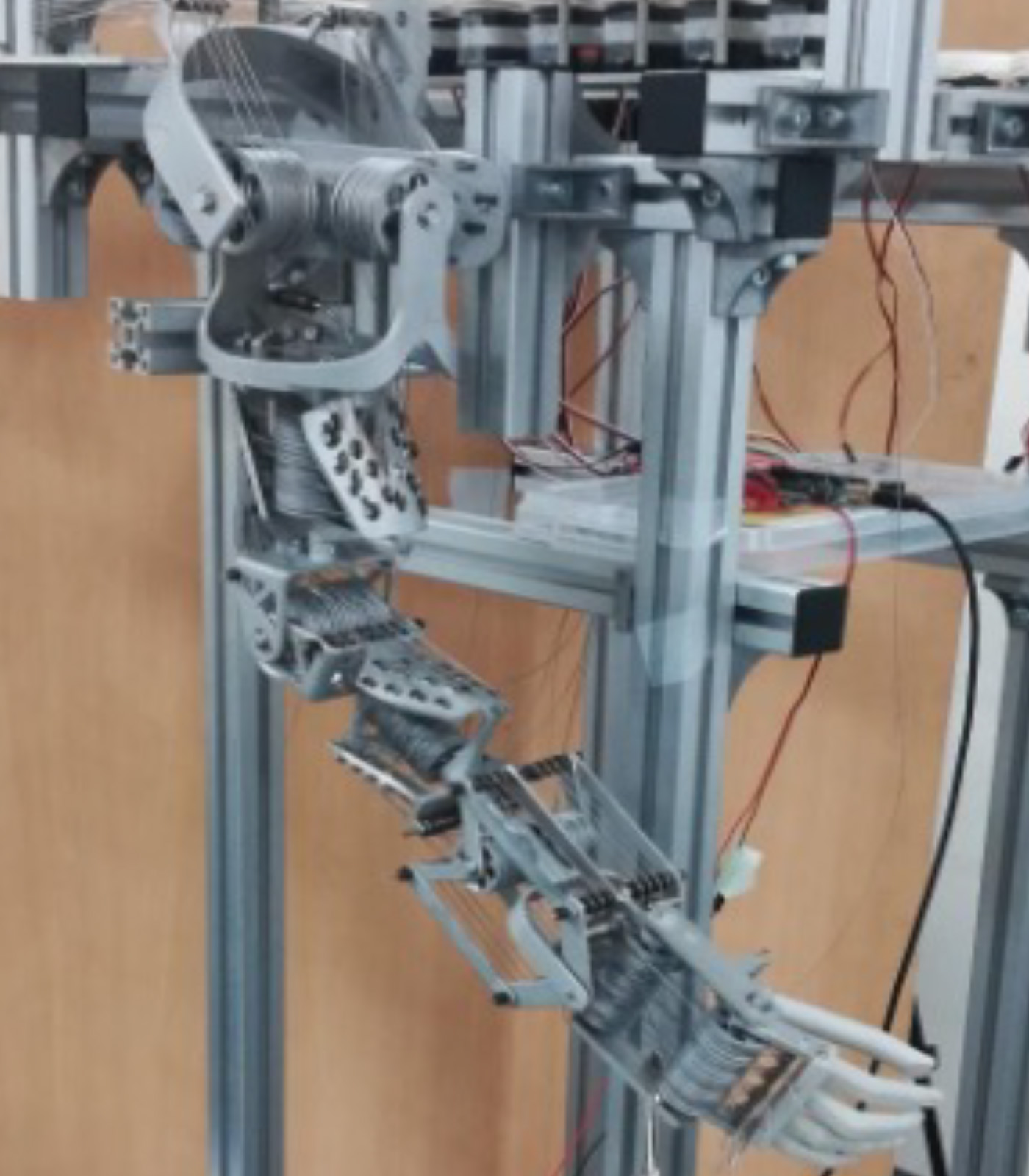
In an 8-joint robotic arm modeled on the human arm and hand, the outputs of all eight actuators contribute to every joint. We develop the design theory and physical implementation of this fully coupled tendon-driven mechanism, aiming at wearable, lightweight, high-output robotic arms.
Technical Features
- Design theory based on Hadamard-type coupling matrices
- Modularized joints for better maintainability
- Development of various elemental technologies for tendon-driven mechanisms
Specifications
- Degrees of freedom: 8
- Weight: approx. 2.4 kg per arm (excluding motors)
- Size: upper-limb length approx. 70 cm, upper-arm circumference approx. 30 cm
Results
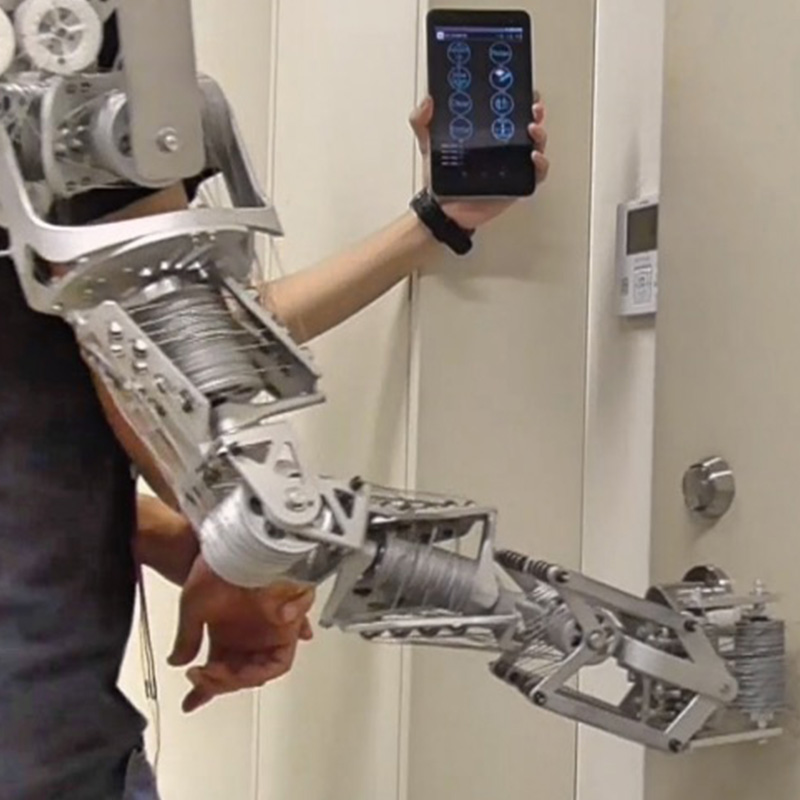
Developed a wearable 8-axis fully coupled tendon-driven robotic arm
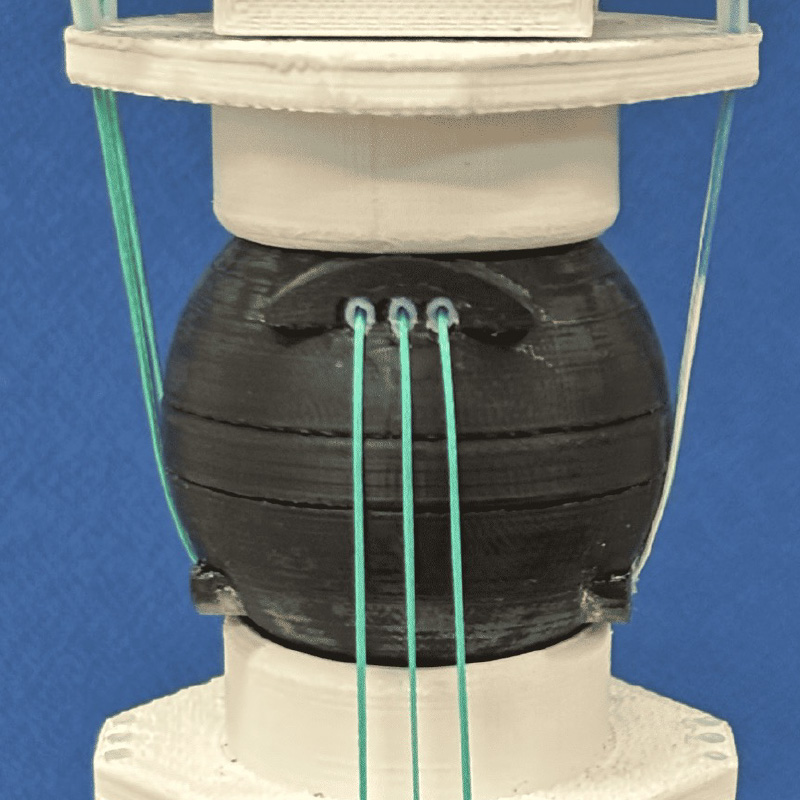
Applied the coupled tendon-driven mechanism to a ball joint
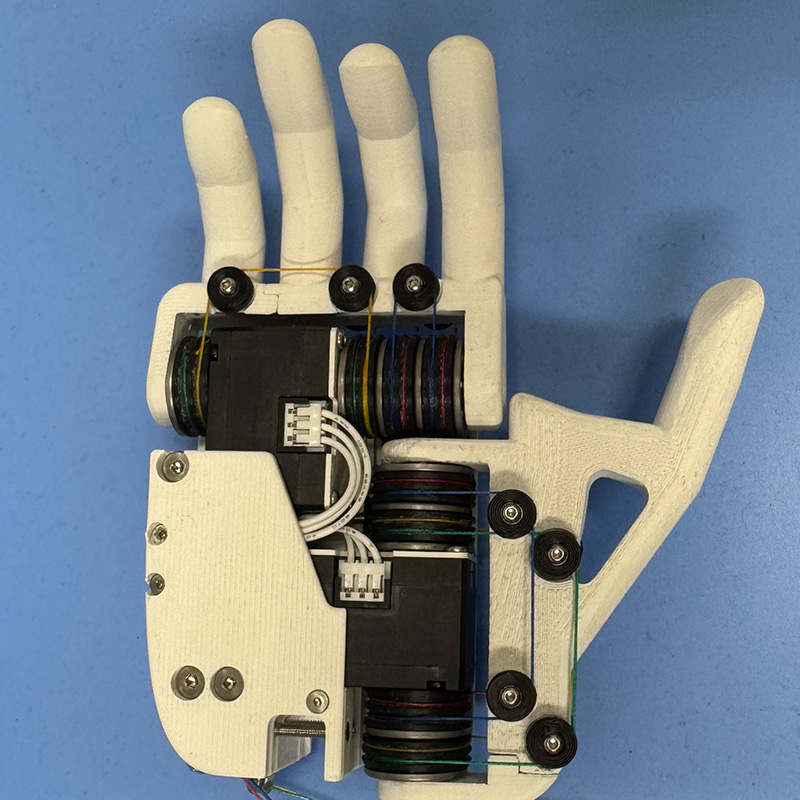
Developed a child-size robotic hand with 2-axis coupling
Infinite Wire-Winding Mechanism
2020 – present
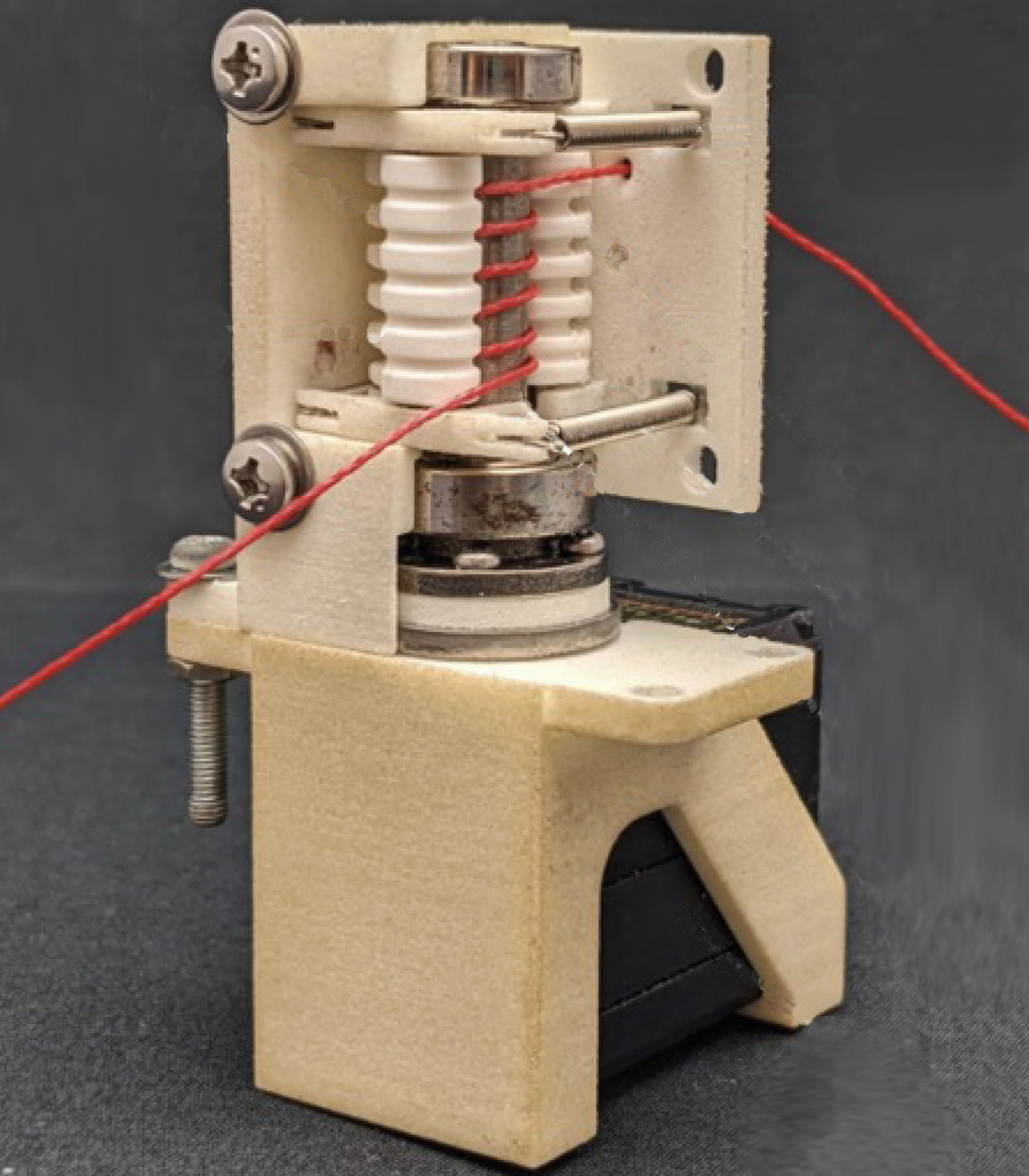
Overview
Conventional wire drives are limited in range of motion by the wire length a drum can wind. We develop mechanisms that can wind wire without limit, eliminating this constraint. The design has been refined over three generations: drum-pressing, drum-synchronized, and drum-tensioning types.
Technical Features
- Traction transmitted by friction between the winding shaft and the wire
- Continuous winding with a small-diameter shaft and no winding-length limit
- Compact and lightweight, yet high traction force
Specifications
- Types: drum-pressing / drum-synchronized / drum-tensioning
- Feature: eliminates the range-of-motion limit of wire drives
- Use: long-stroke traction for wire-driven robots
Results
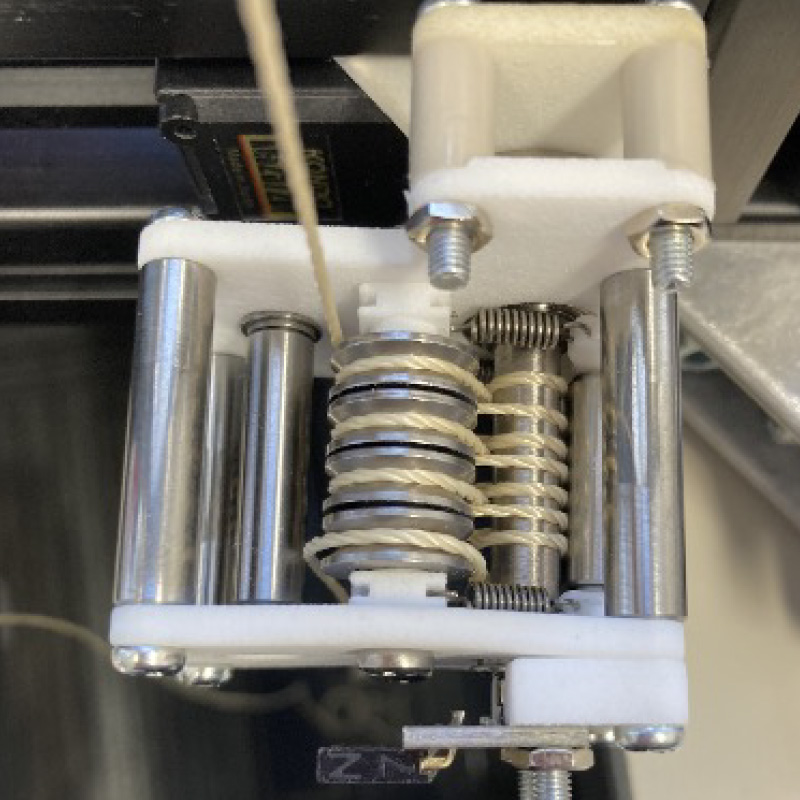
Developed the drum-pressing infinite wire-winding mechanism
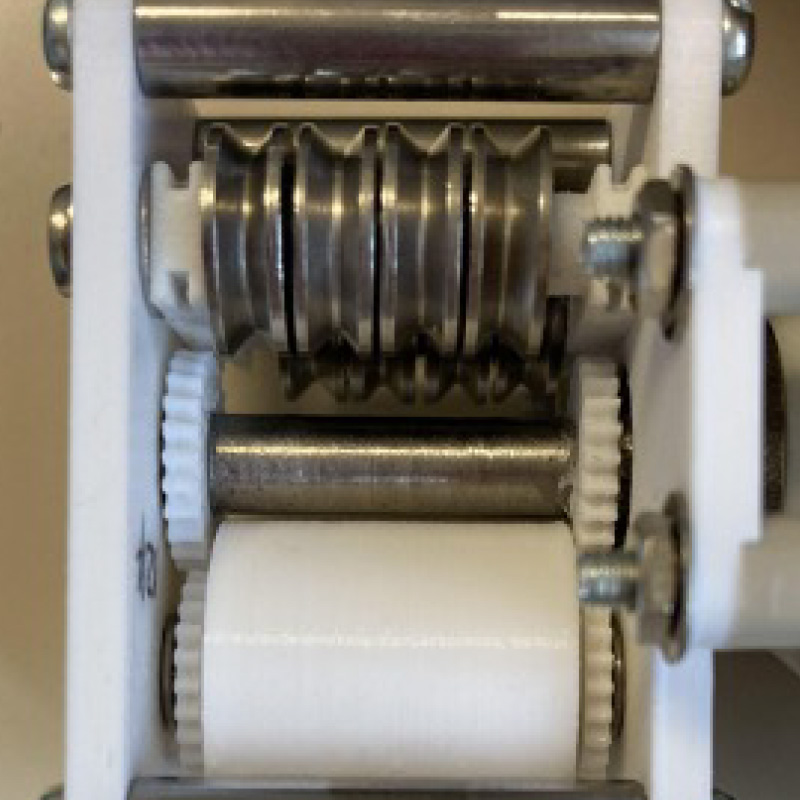
Developed the drum-synchronized infinite wire-winding mechanism
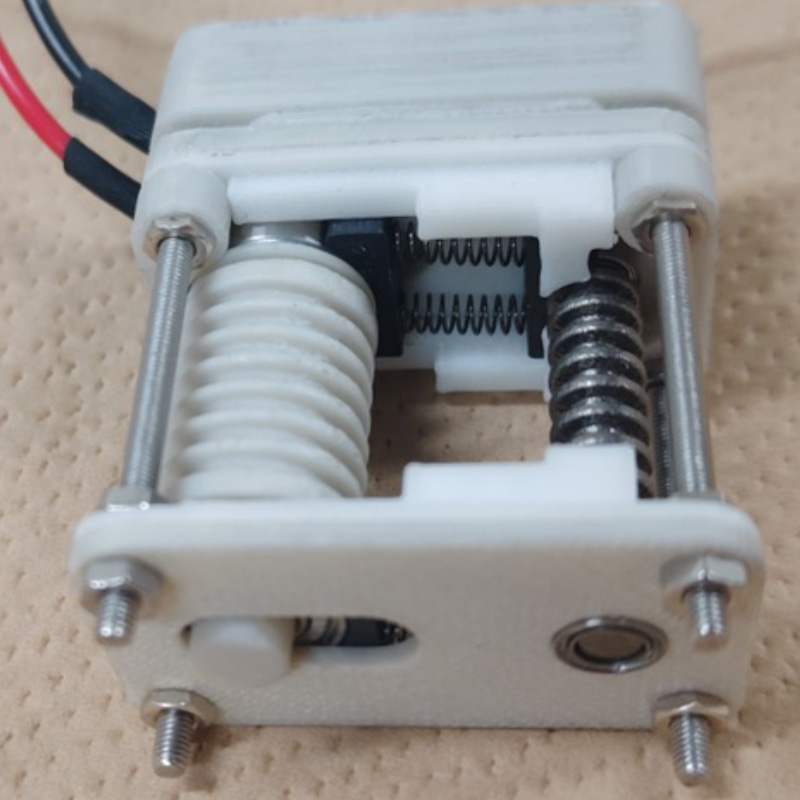
Developed the drum-tensioning infinite wire-winding mechanism
Related Videos (in Japanese)
2020年度 修論 ワイヤ干渉機構を用いた二指干渉駆動ハンドの設計・開発
2020年度 卒論 ワイヤ干渉駆動機構の軽量化および薄型化に関する研究
2021年度 修論 画像認識を用いた装着型ロボットアームの到達把持運動制御に関する研究
2022年度 修論 ワイヤ滑り関節の摩擦低減に関する研究
2022年度 卒論 ドラム同期型ワイヤ無限巻き取り機構の小型化に関する研究
2023年度 卒論 ワイヤ干渉駆動機構を用いた滑り転がり関節に関する研究
2024年度 修論 小児用肩義手のための装着型ワイヤ干渉駆動ロボットアームの開発
2024年度 卒論 引張型ワイヤ無限巻取り機構に関する研究
2025年度 修論 ワイヤ⼲渉駆動機構を⽤いた球関節に関する研究
Related Publications
Journal Papers
International Conference Papers
Shuting Bai, Jiazhen Guo, Yinlai Jiang, Hiroshi Yokoi and Shunta Togo, “Automatic control system for reach-to-grasp movement of a 7-DOF robotic arm using object pose estimation with an RGB camera,” 2023 IEEE International Conference on Robotics and Biomimetics (ROBIO), Samui, Thailand, Dec. 4-9, 2023.
Jiazhen Guo, Peng Chen, Yinlai Jiang, Hiroshi Yokoi and Shunta Togo, “Real-time object detection with deep learning for robot vision on mixed reality device,” 2021 IEEE3rd Global Conference on Life Science and Technologies (LifeTech2021), pp. 82–83, Nara, Japan, 9–11 Mar. 2021.IEEE LifeTech 2021 Outstanding Paper Awards for Demo! Presentation
Yoshinobu Obata, Yuta Murai, Takaki Shimura, Xu Yong, Xiaobei Jing, Shunta Togo, Yinlai Jiang and Hiroshi Yokoi, “Development of compliance actuation mechanism for wire-driven robotic hand using pressure force,” 2018 IEEE International Conference on Robotics and Biomimetics (ROBIO 2018), pp.748-751, Kuala Lumpur Malaysia, 12–15 Dec. 2018.